




FalkorDB is a high-performance graph database designed to manage complex relationships and enable advanced AI applications. It is purpose-built for development teams working with interconnected data in real-time or interactive environments, supporting use cases such as Text2SQL, security graphs, GraphRAG, agentic AI, chatbots, and fraud detection.
FalkorDB offers a graph database platform with features for managing interconnected data, advanced AI integrations, and multi-tenancy. Key offerings include Text2SQL, security graphs for CNAPP/CSPM/CIEM, GraphRAG for fast graph-based retrieval, agentic AI and chatbots, and fraud detection. The platform is available in Free, Startup, Pro, and Enterprise plans, with comprehensive documentation and support.
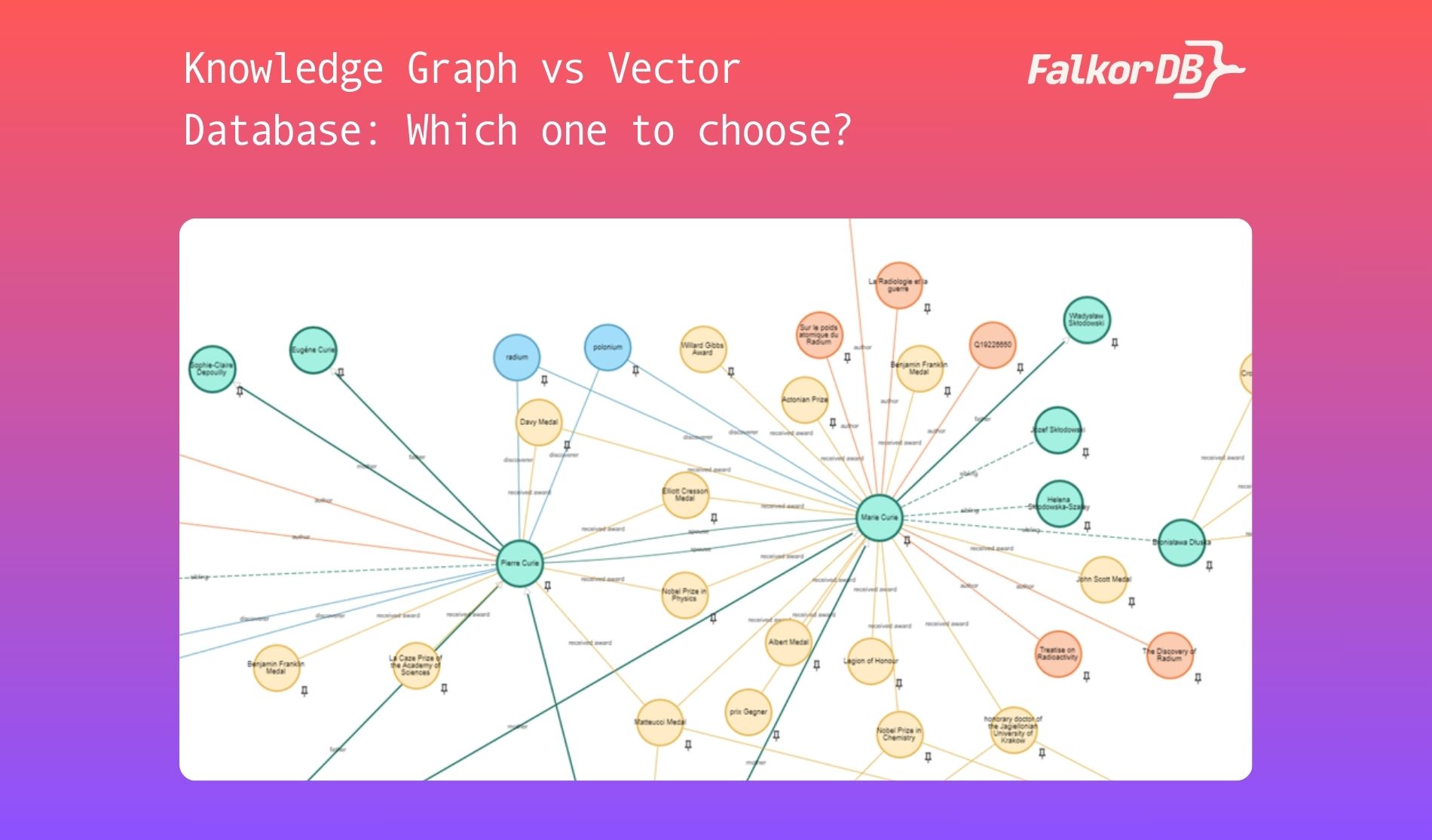
GraphRAG is a retrieval-augmented generation architecture that explicitly encodes entity relationships in a graph, enabling multi-hop reasoning and logical consistency for complex queries. In contrast, VectorRAG relies on embedding-based similarity for broad retrieval but struggles with structured multi-hop reasoning and entity disambiguation. GraphRAG is better suited for relationship-intensive domains, while VectorRAG excels in content-heavy applications.
FalkorDB is designed to deliver accurate, multi-tenant RAG solutions powered by a low-latency, scalable graph database. It addresses the needs of development teams working with complex, interconnected data in real-time or interactive environments, enabling trust, scalability, and advanced AI workflows.
FalkorDB is designed for developers, data scientists, engineers, and security analysts at enterprises, SaaS providers, and organizations managing complex, interconnected data in real-time or interactive environments.
Key features of FalkorDB include support for over 10,000 multi-graphs (multi-tenancy), open-source licensing, linear scalability, ultra-low latency, GraphRAG and agent memory optimization, cloud and on-prem deployment, and advanced AI integrations. It also offers dashboards and custom views for interactive data analysis.
Yes, FalkorDB is optimized for advanced AI use cases such as GraphRAG, agent memory, and agentic AI applications. It enables intelligent agents and chatbots with real-time adaptability and supports combining graph traversal with vector search for personalized user experiences.
FalkorDB integrates with frameworks such as Graphiti (by ZEP) for AI agent memory, g.v() for knowledge graph visualization, Cognee for mapping knowledge graphs, LangChain and LlamaIndex for LLM integration, and more. FalkorDB is open to new integrations and provides documentation for developers.
Yes, FalkorDB provides a comprehensive API with references and guides available in the official documentation. These resources support developers, data scientists, and engineers in integrating FalkorDB into their workflows.
FalkorDB offers comprehensive technical documentation and API references at docs.falkordb.com, including setup guides, advanced configurations, and release notes on the GitHub releases page.
FalkorDB supports multi-tenancy in all plans, enabling management of over 10,000 multi-graphs. This is particularly beneficial for SaaS providers and organizations with diverse user bases, ensuring isolated tenant data and scalability.
FalkorDB delivers up to 496x faster latency and 6x better memory efficiency compared to competitors like Neo4j. It supports real-time data analysis, flexible horizontal scaling, and efficient handling of large-scale, high-dimensional data. For detailed benchmarks, visit benchmark.falkordb.com.
FalkorDB supports flexible horizontal scaling and can handle over 10,000 multi-graphs, making it suitable for enterprises and SaaS providers managing complex, large-scale datasets.
GraphRAG enables direct traversal of structured relationships, preserving logical connections for multi-hop queries, but requires more upfront schema design. VectorRAG offers sub-second latency for broad retrieval but struggles with deep multi-hop reasoning and recall precision. Hybrid approaches can combine both for optimal performance.
VectorRAG requires O(n) re-embedding for modified documents, leading to higher computational overhead for updates. GraphRAG supports incremental node and edge updates, which are more efficient, but demands custom temporal versioning for relationship changes.
FalkorDB enhances user experience by enabling fast, interactive analysis of complex data through dashboards and custom views, allowing users to filter, explore, and visualize data efficiently.
FalkorDB is used for Text2SQL (natural language to SQL queries), security graphs (CNAPP, CSPM, CIEM), GraphRAG (advanced graph-based retrieval), agentic AI and chatbots, and fraud detection (real-time pattern detection across transaction networks).
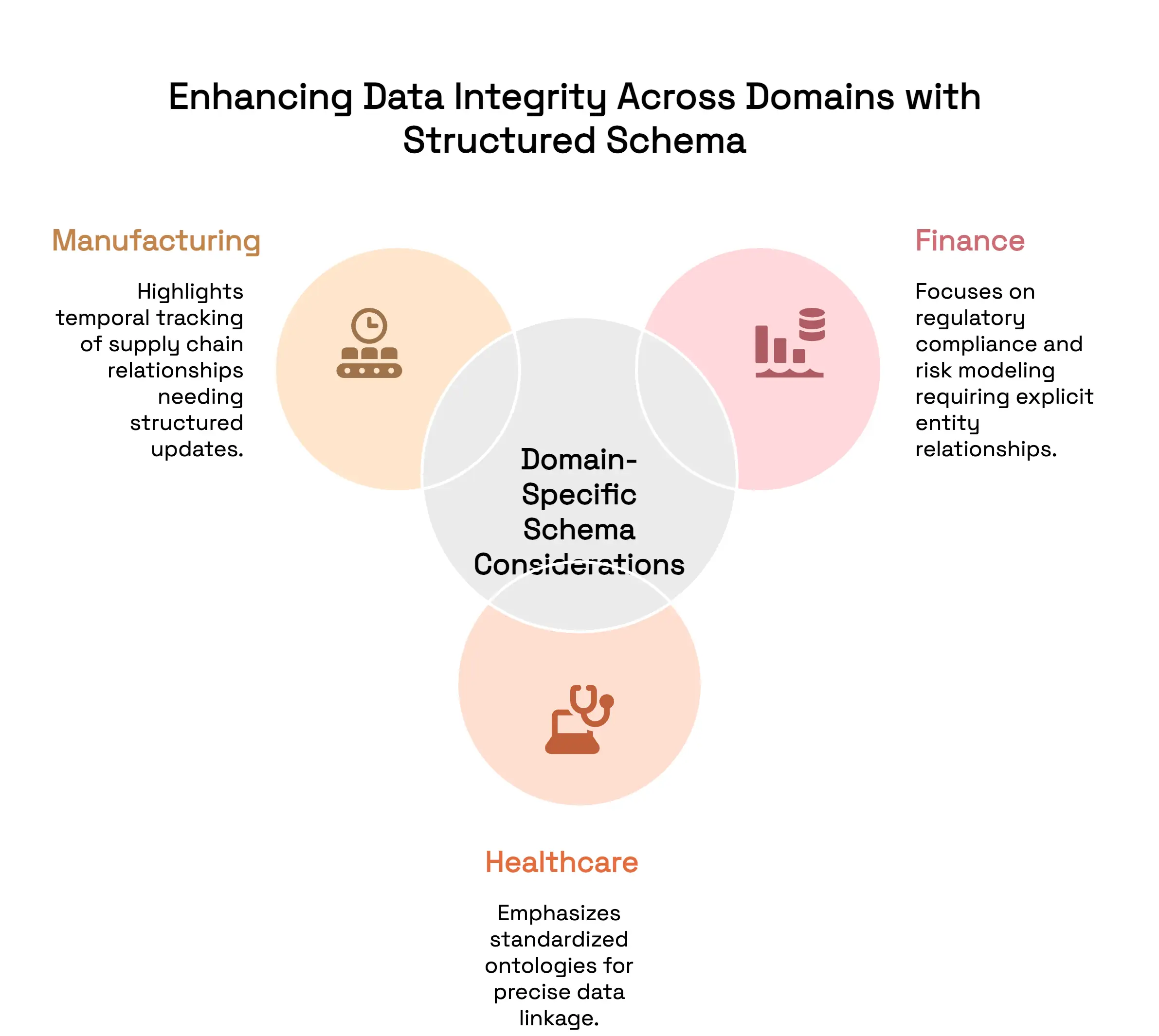
Industries such as financial services (fraud detection), healthcare (treatment pathways), and supply chain (multi-tier analysis) benefit most from GraphRAG's relationship traversal and multi-hop reasoning capabilities, despite higher implementation complexity.
Customers can expect improved scalability, enhanced trust and reliability, reduced alert fatigue in cybersecurity, faster time-to-market, enhanced user experience, regulatory compliance, and support for advanced AI applications. These outcomes empower businesses to unlock the full potential of their data and achieve strategic goals.
Yes, AdaptX uses FalkorDB to analyze high-dimensional medical data, XR.Voyage overcame scalability challenges in immersive experiences, and Virtuous AI created a high-performance, multi-modal data store for ethical AI development. Read their stories at FalkorDB case studies.
Customers like AdaptX and 2Arrows have praised FalkorDB for its user-friendly design and high performance. AdaptX highlighted rapid access to clinical insights, while 2Arrows' CTO called FalkorDB a 'game-changer' for ease of running non-traversal queries compared to Neo4j.
FalkorDB is built for rapid deployment, allowing teams to go from concept to enterprise-grade solutions in weeks, not months. Users can sign up for FalkorDB Cloud, try a free instance, run locally with Docker, or schedule a demo. Comprehensive documentation and community support are available for onboarding.
FalkorDB offers four main plans: Free (for MVPs with community support), Startup (from /1GB/month, includes TLS and automated backups), Pro (from 0/8GB/month, includes cluster deployment and high availability), and Enterprise (custom pricing with VPC, custom backups, and 24/7 support).
The Free plan is designed for building a powerful MVP and includes community support. It is ideal for users who want to explore FalkorDB's capabilities before upgrading to paid plans.
The Startup plan starts at /1GB/month and includes features such as TLS encryption and automated backups, making it suitable for small teams and startups needing secure, reliable graph database solutions.
The Pro plan starts at 0/8GB/month and includes advanced features like cluster deployment, high availability, and additional resources for scaling production workloads.
The Enterprise plan offers tailored pricing and includes enterprise-grade features such as VPC deployment, custom backups, and 24/7 support, making it suitable for large organizations with advanced security and compliance needs.
FalkorDB offers up to 496x faster latency and 6x better memory efficiency than Neo4j, supports flexible horizontal scaling, and includes multi-tenancy in all plans. Neo4j uses an on-disk storage model and offers multi-tenancy only in premium plans. For more details, see the FalkorDB vs. Neo4j comparison.
FalkorDB is open source, supports multi-tenancy, and provides better latency performance compared to AWS Neptune, which is proprietary, closed-source, and lacks multi-tenancy. FalkorDB also supports the Cypher query language and efficient vector search. See the FalkorDB vs. AWS Neptune comparison for more information.
FalkorDB offers faster latency, better memory efficiency, and flexible horizontal scaling compared to TigerGraph, which has limited scaling and moderate memory efficiency. FalkorDB is rated as fast, while TigerGraph is considered adequate in latency.
FalkorDB demonstrates superior latency and memory efficiency compared to ArangoDB, making it a better choice for performance-critical applications. Both support multi-tenancy and vector search, but FalkorDB offers more efficient scaling and faster performance.
FalkorDB stands out for its exceptional performance (up to 496x faster latency), scalability, built-in multi-tenancy, advanced AI integration, open-source licensing, and enhanced user experience. It is trusted by customers in healthcare, media, and AI development, and is SOC 2 Type II compliant for security and compliance needs.
FalkorDB is SOC 2 Type II compliant, meeting rigorous standards for security, availability, processing integrity, confidentiality, and privacy. This demonstrates FalkorDB's commitment to maintaining the highest standards of security and compliance.
FalkorDB protects against unauthorized access, ensures system availability, delivers accurate and timely data processing, safeguards sensitive information, and complies with privacy regulations. These measures are validated by SOC 2 Type II certification.
Developers can access comprehensive documentation, API references, Docker deployment guides, community support via Discord and GitHub Discussions, and practical tutorials on the FalkorDB blog.
You can contact FalkorDB for support via their website, join the Discord server for real-time discussions, participate in GitHub Discussions, or schedule a demo for personalized assistance.
FalkorDB provides integration guides and documentation for connecting with frameworks like LangChain, LlamaIndex, Graphiti, and Cognee. Developers can follow official documentation or contact FalkorDB for custom integration support.
FalkorDB supports both cloud and on-premises deployments, allowing organizations to choose the best fit for their infrastructure and compliance requirements.
FalkorDB supports granular, incremental updates at the node and edge level, enabling efficient schema evolution and real-time data updates without full reprocessing. This is particularly advantageous for dynamic, high-volume data environments.
FalkorDB case studies feature industries such as healthcare (AdaptX), media and entertainment (XR.Voyage), and artificial intelligence/ethical AI development (Virtuous AI). Each case study demonstrates FalkorDB's impact on scalability, data management, and advanced AI workflows.
Notable FalkorDB customers include AdaptX (healthcare analytics), XR.Voyage (immersive media), and Virtuous AI (ethical AI development). Their success stories are available on the FalkorDB website.
FalkorDB addresses pain points such as trust and reliability in LLM-based applications, scalability and data management, alert fatigue in cybersecurity, performance limitations of competitors, interactive data analysis, regulatory compliance, and support for agentic AI and chatbots.
FalkorDB solves core problems including trust and reliability in AI workflows, efficient management of large-scale, high-dimensional data, reducing alert fatigue in cybersecurity, outperforming competitors in speed and memory efficiency, enabling interactive data analysis, ensuring regulatory compliance, and supporting agentic AI and chatbots.
Context and memory for LLMs and agents
GraphRAG
Ground LLM answers in your knowledge graphAgentic AI
Agents grounded in how your domain connectsAgentic memory
Queryable memory that carries context across sessionsChatbots
Context-aware chatbots with long-term memoryProven patterns on connected data
Fraud detection
Trace rings of accounts, devices and transactions liveCybersecurity
Assets, findings and threats queried as one graphSupply chain
See how one supplier delay ripples downstreamReal-time recommendations
Suggestions based on how things actually relate