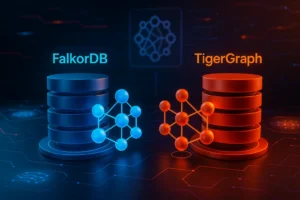
FalkorDB vs TigerGraph: Which Graph Database Is Best for AI Workloads?
A single graph traversal that takes 200 milliseconds instead of 2 milliseconds can destroy the responsiveness of an entire AI pipeline. That gap matters more


A single graph traversal that takes 200 milliseconds instead of 2 milliseconds can destroy the responsiveness of an entire AI pipeline. That gap matters more
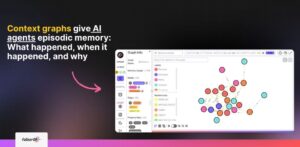
Context graphs transform AI agents from stateless responders into context-aware systems with institutional memory. Learn how to capture the “why” behind decisions using FalkorDB’s graph technology.
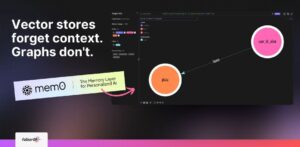
mem0-falkordb gives AI agents persistent graph memory via FalkorDB — replacing flat vector retrieval with entity-relationship traversal, per-user graph isolation, and sub-140ms query performance.

Text-to-SQL systems hallucinate tables and columns because LLMs get no relational context. Graph-based semantic layers represent the schema as a knowledge graph, so retrieval can traverse real foreign keys, prune irrelevant tables, and ground every generated query in the actual database.

A technical guide to graph databases covering core concepts, query languages, use cases, and implementation practices for AI architects and developers.

Code graph analysis converts source code into visual relationship maps. FalkorDB’s tool parses repositories to reveal function calls, class hierarchies, and module dependencies developers miss.

FalkorDBLite brings SQLite-style simplicity to graph databases. Spin up a lightweight sub-process with zero network overhead, process isolation, and no configuration required for prototyping and testing.

FalkorDB unites OLTP precision and OLAP speed through sparse adjacency matrices, enabling vectorized graph traversal and direct node access for AI-driven connected data workloads.
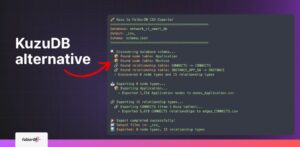
KuzuDB has gone through EOL. FalkorDB has put together a simple, 2-step migration guide for developers looking for an alternative graph database.

We built Text-to-Cypher to let you chat with FalkorDB graphs using plain English. Get instant Cypher query generation via REST API or MCP server. Open source, Docker-ready, with real-time SSE updates.